You can speak fluent Spanish and still miss every joke in the room. Humour is the part of a culture that travels worst — it sits on top of history, politics, regional rivalries and a shared sense of what is and isn’t sacred. Spain has one of Europe’s richest comic traditions, and once you understand how it works, the country becomes considerably funnier.
Irony comes first, sincerity comes later
Spanish conversation runs on irony to a degree that catches many visitors off guard. Praise is often delivered as mock insult, and genuine affection arrives wrapped in sarcasm. A friend who calls you an idiot for turning up late is not annoyed — they’re including you. Take it literally and you’ll spend your first week in Madrid quietly wondering what you did wrong.
This matters in a comedy room. Spanish audiences are comfortable with performers who are abrasive, self-deprecating or openly rude about their own city, family and government. Warmth and bite aren’t opposites here; they’re the same gesture.
Wordplay is a national sport
Spanish is unusually well built for punning. It has a flexible word order, a deep well of idioms, and enough regional variation that the same phrase can mean different things four hundred kilometres apart. The result is a comic culture that prizes verbal dexterity — the quick retort, the double meaning, the joke that turns on a single syllable.
The clearest example is the chirigota, the satirical singing group central to the Cadiz carnival, where entire choruses are built from layered puns aimed at politicians and public figures. It’s comedy as craft, rehearsed for months. Nothing in it survives translation, which is precisely the point.
The grotesque tradition
Spain has a long appetite for the dark and the deformed. The writer Ramon Maria del Valle-Inclan gave it a name in the early twentieth century: esperpento, a style that distorts reality like a funhouse mirror to expose what’s underneath. You can trace the same instinct through Goya’s later paintings, through the films of Luis Garcia Berlanga, and straight into contemporary Spanish stand-up.
Its everyday cousin is mala leche — literally “bad milk”, roughly meaning a bitter or ill-tempered streak. Used about comedy, it’s a compliment. A comedian with mala leche goes after the uncomfortable thing rather than around it.
Nothing is too close to home
Regional identity is comic fuel. Madrilenos, Catalans, Andalusians, Basques and Galicians all carry well-worn stereotypes that get mined relentlessly, usually by people from those regions themselves. Family, religion, bureaucracy and the housing market are all fair game. Spanish comedy tends to punch in every direction at once, including inward, and audiences are rarely precious about it.
Hearing it live in Madrid
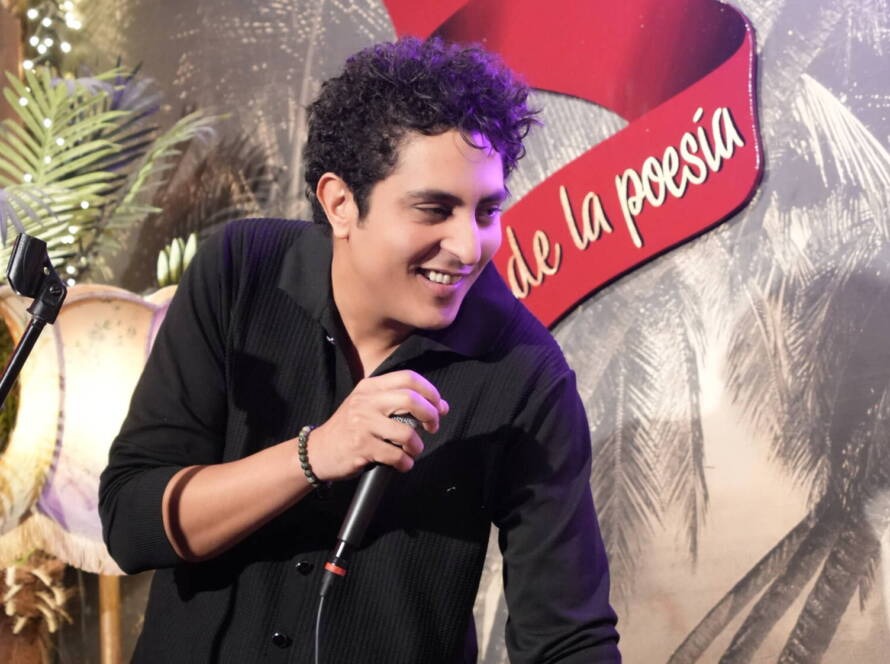
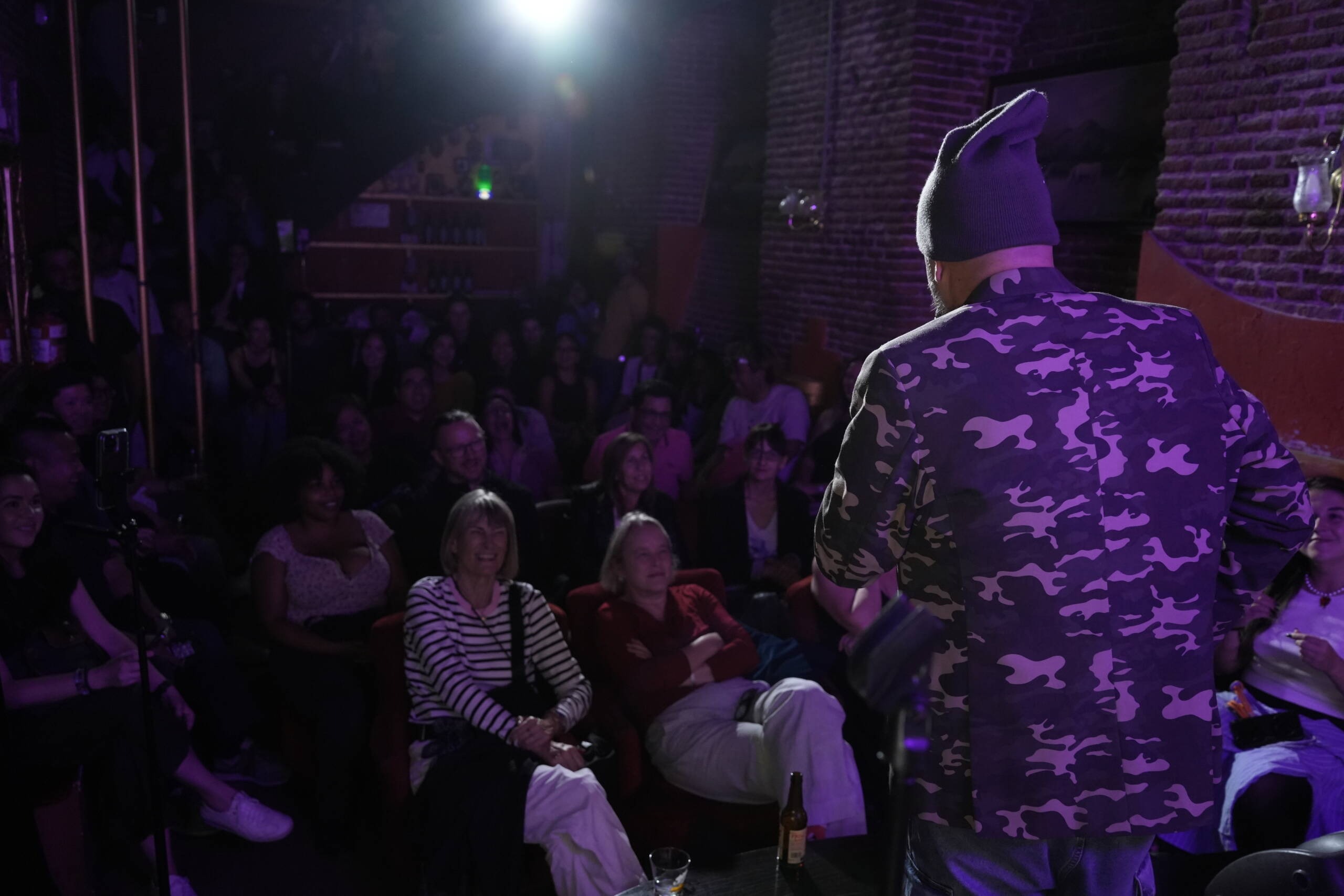
Reading about a comic culture only gets you so far. Madrid has a busy live scene where you can hear Spanish humour in its natural habitat. Our guide to stand-up comedy in Madrid covers where to start, and the city’s comedy clubs run shows most nights of the week.
If you’d rather hear several comic traditions in one weekend, that’s the idea behind the Madrid Comedy Festival, which runs shows in Spanish, English, French, Hindi, Italian and more — each performed in its original language. Watching one room laugh at four different comic styles in a night is the fastest cultural education available. See the programme or book tickets.
Frequently asked questions
Is Spanish humour offensive by British or American standards?
It can read that way at first. Spanish comedy is generally more direct about bodies, religion, class and regional identity, and less concerned with softening the blow. Most of it is affectionate underneath — but the surface is blunter than many visitors expect.
Do I need fluent Spanish to enjoy Spanish stand-up?
Comfortable conversational Spanish is usually enough to follow a set, though puns and topical references will pass you by. If you’re not there yet, start with English-language shows and work up — watching comedy in a second language is excellent practice.
What does mala leche mean?
Literally “bad milk”. It describes a sour or spiteful streak, and applied to a comedian it means someone willing to be genuinely cutting. In comedy it’s praise rather than criticism.