

Spain had been funny for centuries before anyone stood alone behind a microphone. But stand-up as a form — one person, one mic, their own words — arrived unusually late and by an unusual door: television. Understanding that origin story explains almost everything distinctive about Spanish comedy today, including why a multilingual festival in Madrid makes sense now and couldn’t have existed twenty-five years ago.
Before the mic: a deep comic tradition
Spain’s humour lived in other containers: the sainete and the zarzuela, café-theatre, variety shows, and brilliant solo humorists like Gila, whose telephone monologues in the mid-20th century were stand-up in everything but name. What was missing wasn’t funny people — it was the club circuit that, in the United States and Britain, let comedians develop a personal voice in front of live audiences night after night.
1999: television invents the circuit backwards
In most countries, comedians grind in clubs for years and the best reach TV. Spain did it in reverse. In 1999, El Club de la Comedia began broadcasting polished, theatre-staged monologues to a national audience, and the monólogo became a household word almost overnight. Around the same era, the channel then called Paramount Comedy (today Comedy Central España) went looking for live comedians for formats like Nuevos Cómicos — and found the circuit so thin that, as veterans of that era tell it, they had to pull comics out from under the stones. Television created the demand first; the live scene grew to meet it.
That origin left a mark. For years, many Spaniards assumed a monólogo meant a celebrity performing a script someone else wrote — the television format — rather than a comedian’s own life turned into material. The distance between those two ideas is roughly the history of the last two decades of Spanish comedy.
The 2000s and 2010s: the live scene grows up
From those TV canteras came a generation of working comedians, and with them the thing Spain had lacked: rooms. Comedy clubs and monólogo nights spread through Madrid and Barcelona, then everywhere; comedians began writing in their own voices; podcasts and later streaming specials gave Spanish stand-up channels that didn’t depend on television’s taste. The form stopped being an import and became a scene.
The newest chapter: comedy in every language
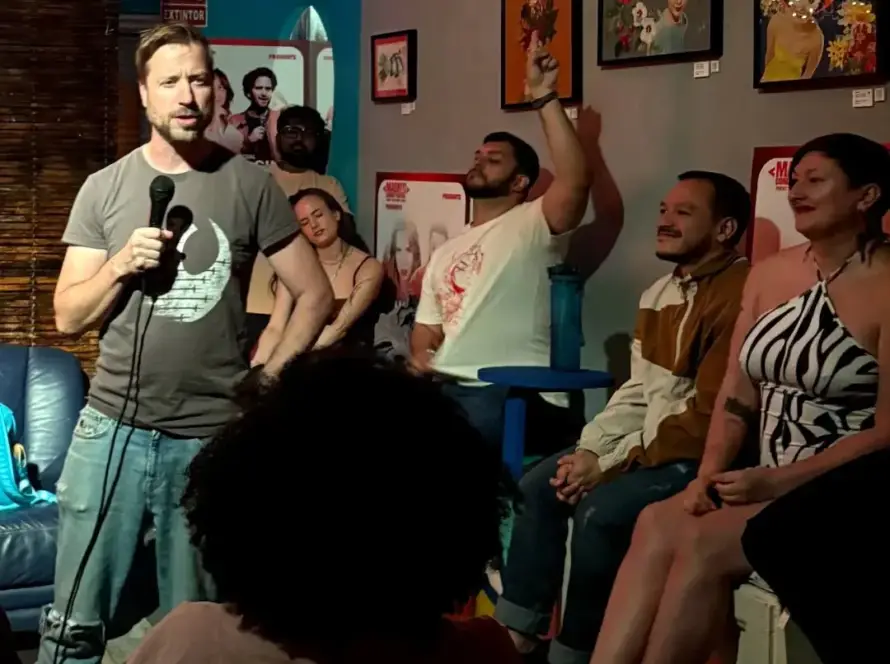
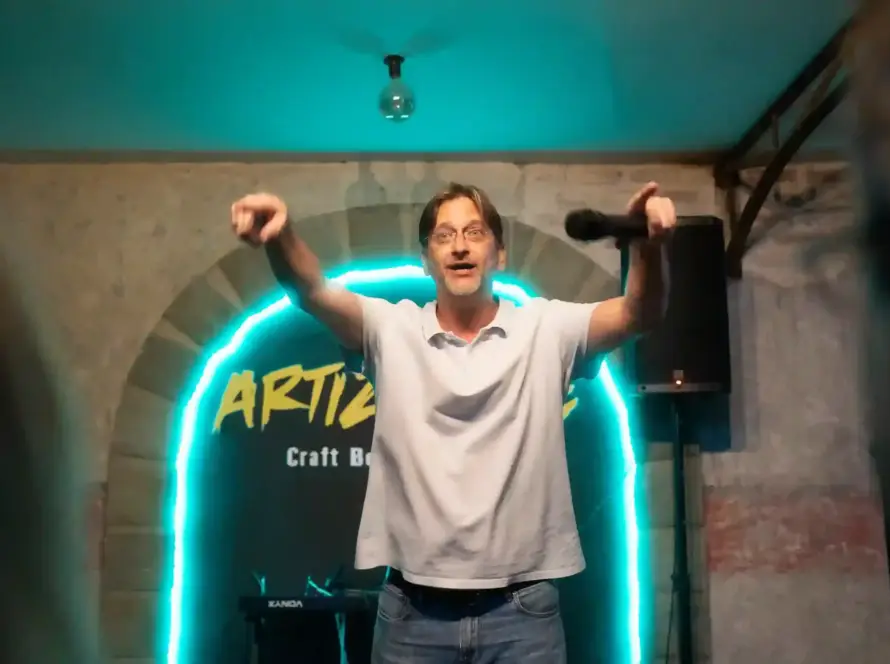
The latest turn is the one we live inside. Spain’s big cities filled with residents from everywhere, and stand-up — the cheapest art form on earth to stage — was the natural place their stories went. Madrid now has a thriving English-language scene alongside the Spanish one, open mics in several languages, and audiences happy to laugh in their second language. How the city got here is a story of its own — we tell it in how Madrid became one of Europe’s most exciting comedy cities — and it is the story the Madrid International Comedy Festival was created to celebrate: Spanish tradition and international voices on the same October stages. The next edition runs 6–10 October 2027; the festival’s own short history is on the facts and figures page.