
Textbook Spanish will get you served. It won’t make you sound like you’ve been here before. Madrid has its own bar vocabulary — a handful of words and constructions that locals use constantly and that almost no language course teaches. Learn these and the whole evening runs more smoothly.
Ordering a drink
The single most useful word in Madrid is caña — a small draught beer, roughly a third of a pint. It’s what most people drink most of the time, and ordering one marks you out immediately as someone who knows the form. Una caña, por favor.
The natural way to order isn’t quiero (I want) but ¿me pones…? — literally “will you put me…”. So: ¿Me pones una caña? It sounds abrupt translated, but in Spanish it’s friendly and completely standard. A few more worth having:
- Una clara — beer with lemon soda, common in warm weather.
- Un vermut — vermouth on tap, a Madrid weekend ritual before lunch.
- Un tinto de verano — red wine with soda. What locals drink instead of sangria.
- ¿Qué me recomiendas? — what do you recommend? Almost always answered honestly.
- Otra ronda — another round.
Space, seats and the bill
Madrid bars are crowded and standing is normal. ¿Está libre? — is this free? — covers both a chair and a stretch of bar. Perdona is the everyday “excuse me” for getting past someone or catching attention.
When you’re done: La cuenta, por favor. Tipping is modest here — rounding up or leaving small change is normal, and nobody expects a percentage. ¿Dónde está el baño? gets you to the toilet.
The shape of the night
Madrid nights have their own vocabulary because they have their own structure. Ir de cañas means going out for beers, usually moving between several bars rather than staying put. Salir de fiesta is the full night out. La última — the last one — is a phrase said hopefully and rarely honoured.
The word that best captures the city is madrugada: the stretch between roughly 2am and dawn, treated here as a legitimate part of the evening rather than a mistake. Our nightlife guide explains how the timings actually work.
Laughing in Spanish
Stand-up in Spain is a monólogo and the performer is a monologuista. A joke is a chiste. If something is funny, tiene gracia — it has grace, which is a better way of putting it than English manages.
For genuinely helpless laughter, me parto (I’m splitting) or me troncho. And ¡qué fuerte! — literally “how strong” — is the all-purpose exclamation for anything shocking, outrageous or very funny. You’ll hear it constantly.
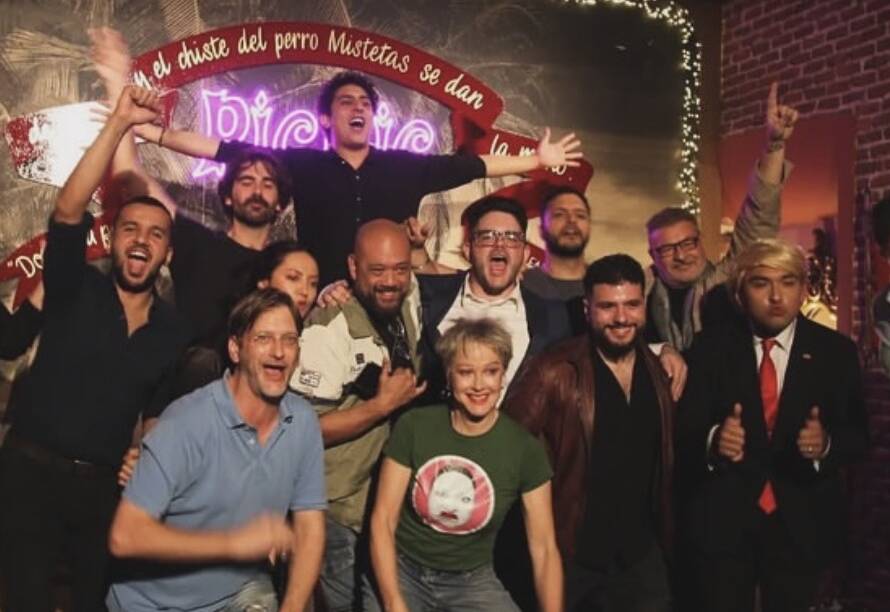
If you want to test any of this in a room full of native speakers, live comedy is the place. Our guide to watching comedy in a second language makes the case, and the Madrid Comedy Festival programmes shows in Spanish, English, French, Hindi, Italian and more each October.
Frequently asked questions
Should I use tú or usted?
In Madrid, tú almost always. Spain is far less formal than much of Latin America, and using usted with a bartender your own age can sound stiff or faintly sarcastic. Save it for much older strangers and formal settings.
Is it rude to order in English?
Not at all, and in central Madrid you’ll usually be understood. But opening in Spanish, however badly, changes the temperature of the interaction noticeably. Effort counts for more than accuracy.
Do I need to tip in Madrid?
No. Service is included and tipping is optional and small — rounding up the bill or leaving a euro or two after a meal is generous. There’s no expectation of a percentage.