
Moving to Madrid is easy. Building a life there is the harder part — particularly in the first few months, when your Spanish isn’t good enough to make friends but your patience for expat small talk is already running low. Madrid has one of the largest international populations in southern Europe, and there’s a real English-speaking community here. It just isn’t always obvious where it gathers.
Language exchanges are the front door
The intercambio — a language exchange, usually held in a bar on a weeknight — is the single most useful institution available to a newcomer. The format is simple: half an hour in Spanish, half an hour in English, repeat with someone new. They’re free or close to it, they run all over the centre, and crucially they’re full of both locals and foreigners, which is not true of most expat events.
The social function matters more than the linguistic one. Nobody learns a language in a noisy bar. But you will meet people, and in a new city that’s the actual bottleneck.
Where the international crowd actually lives
Lavapies is the most genuinely multicultural district in the city and has been for decades. Malasana and Chueca draw a younger international crowd, though rents there have climbed steeply. Further out, neighbourhoods like Tetuan and Carabanchel are where a lot of people end up once the novelty of paying central prices wears off.
Wherever you land, Madrid’s Metro makes the whole city viable — living thirty minutes out is not the exile it would be in London or Paris. Our transport guide covers how the system works, and our neighbourhood guide compares the central districts.
Remote work and the paperwork question
Madrid has become a serious base for remote workers, helped by fast internet, comparatively low costs and a visa route aimed specifically at people working remotely for non-Spanish employers. Immigration rules change regularly and the detail matters, so check the current requirements with official Spanish government sources or a qualified adviser rather than relying on blog posts — including this one.
Coworking spaces are plentiful and are one of the better ways to meet people with similar schedules. Many run social events that are open to non-members.
The English-language culture scene
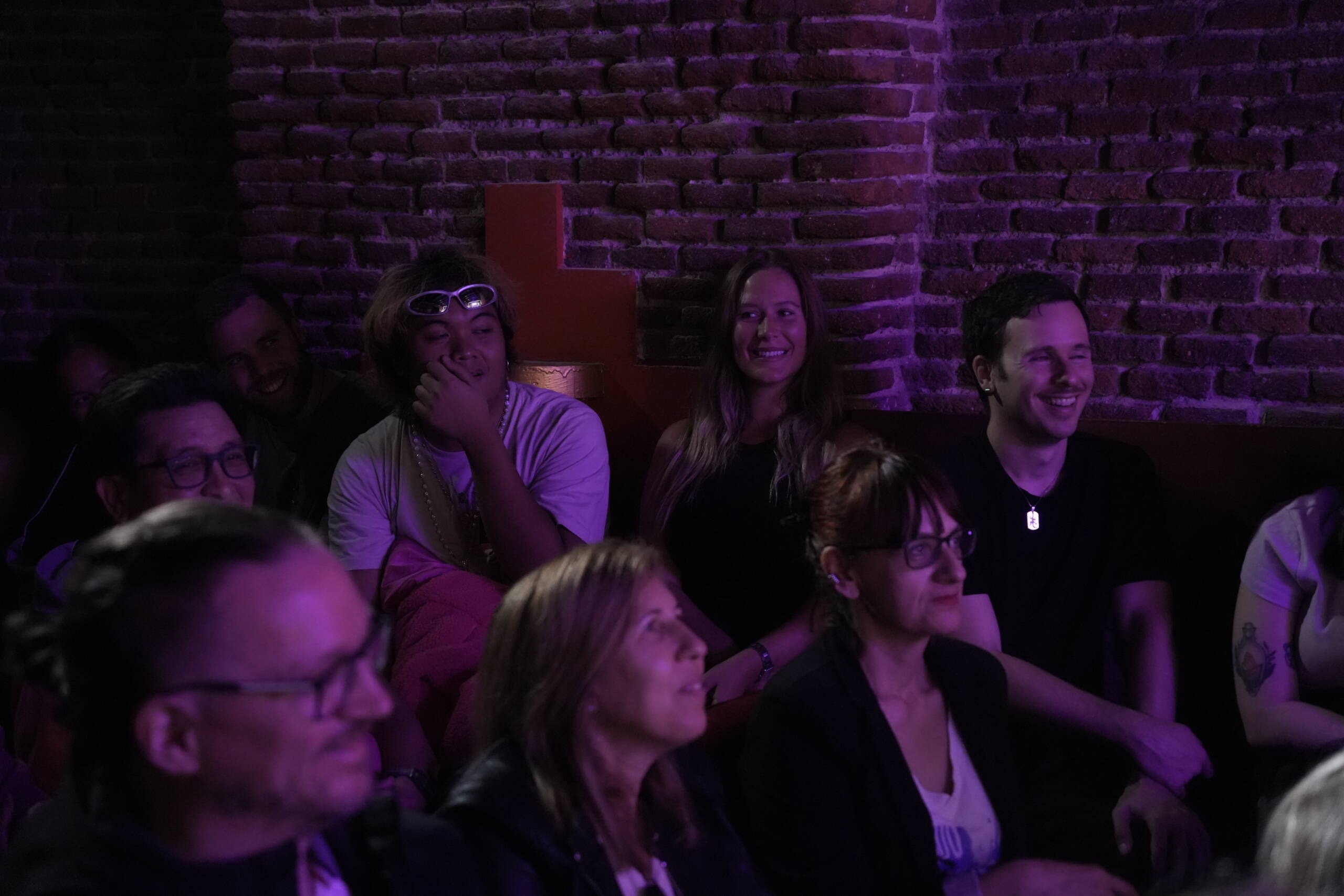
This is the part newcomers usually discover last. Madrid has a steady programme of English-language events — cinema screenings in the original version, theatre, pub quizzes, book groups, and a live comedy circuit that performs in English several nights a week.
Comedy is a particularly efficient way in, because the rooms are small and the audiences are mixed rather than exclusively foreign. Our guide to English stand-up in Madrid covers what’s on and where. If you’re thinking of getting on stage yourself, the open mic scene is welcoming and low-stakes.
Once a year the scale steps up: the Madrid Comedy Festival brings comedians from around the world to the city for four days, performing in English, Spanish, French, Hindi, Italian and more. See the programme for what’s coming up.
Frequently asked questions
Can you live in Madrid without speaking Spanish?
You can survive, but you’ll live in a much smaller version of the city. English is common in international workplaces and central hospitality, far less so in administration, healthcare and everyday neighbourhood life. Learning even basic Spanish changes the experience substantially.
How do I meet people beyond other foreigners?
Choose activities organised around something other than being foreign — a sport, a choir, a climbing gym, a comedy night. Language exchanges work well because they attract locals by design. Purely expat groups are useful early on but tend to keep you in a bubble.
Is Madrid expensive for remote workers?
Less so than most western European capitals, though rents in central districts have risen sharply in recent years. Eating out, transport and everyday costs remain reasonable by comparison.
Related: more on English-language things to do in Madrid this autumn.