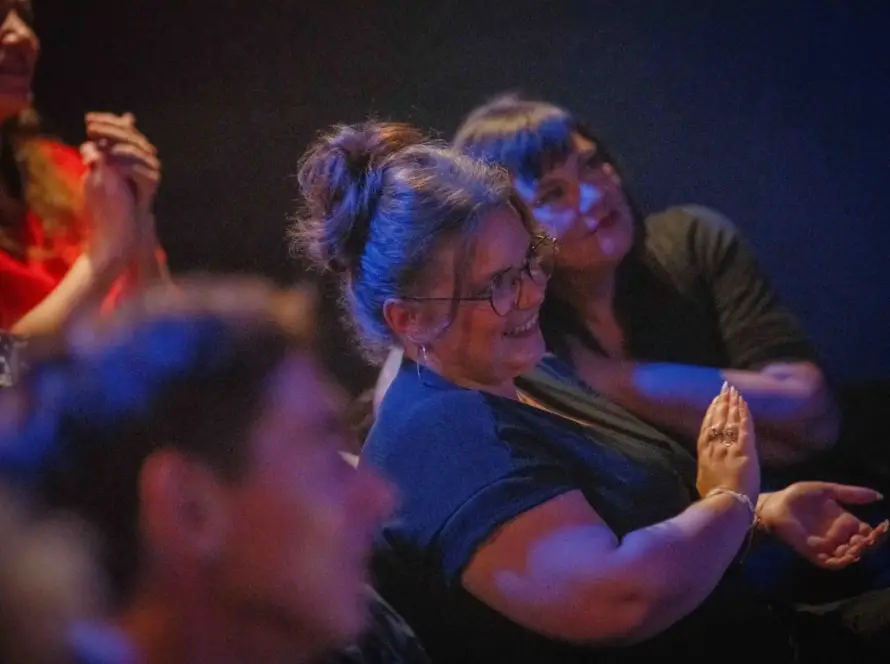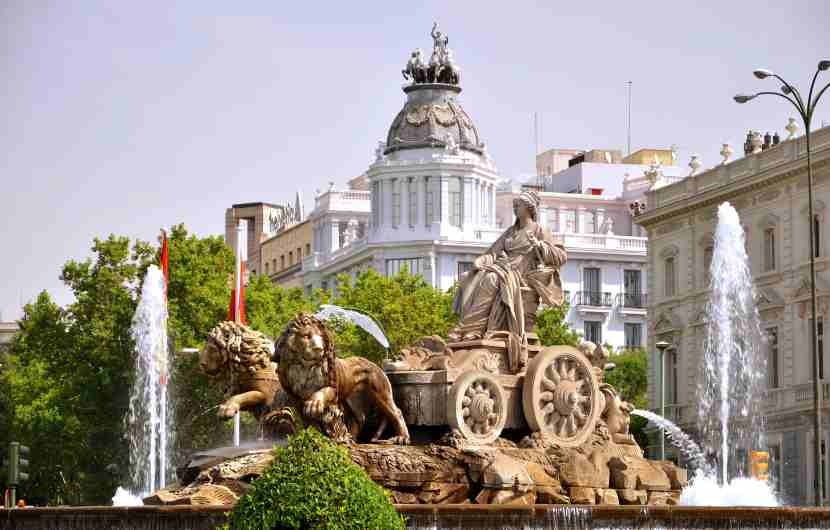


Every October, for a few days, Madrid gets a taste of what a city full of comedy feels like. In 2026 the Madrid International Comedy Festival ran 38 shows in nine venues, and on most nights there were people standing at the back. Then the festival ends, and we keep coming back to the same question: why can’t the city feel like that for more of the year?
This piece is about comedy venues in Madrid: the rooms that exist, why small ones are so hard to keep open, and what a stronger year-round comedy culture would need.
Madrid already has the audience
Demand isn’t the problem. The Comunidad de Madrid, the region around the capital, accounted for 38.3% of all performing arts spectators in Spain in 2024 and 49.2% of the country’s box office, according to the SGAE yearbook. Listings sites such as teatromadrid.com carry hundreds of humour and monologue shows at any given time, from big touring names on Gran Vía to newer comedians in small rooms.
The city’s audience is also broad. Madrid had 3,497,277 registered residents on 1 January 2026, and 30.5% of them were born outside Spain (Ayuntamiento de Madrid). That’s an audience for comedy in Spanish, in English and in many other languages.
Where comedy happens in Madrid today
Most comedy in Madrid doesn’t happen in big theatres. It happens in the back rooms of bars and in small theatres, many of them in Malasaña, La Latina and Lavapiés. The festival’s 2026 venues show the range:
- Picnic and Freeway in Malasaña, two of the best-known comedy rooms in the city
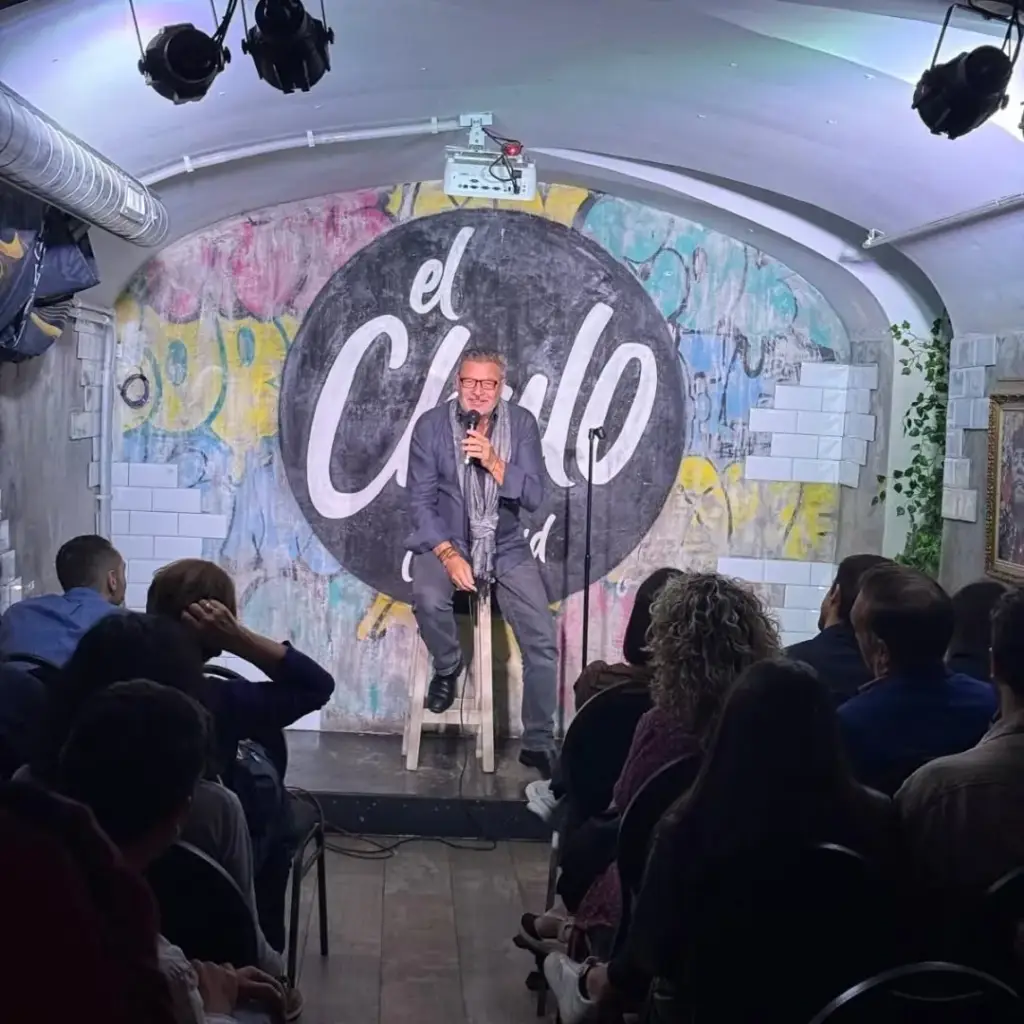
- Tropicana, El Chulo de Madrid and Malo Malasaña, bars where comedy shares the space with everything else
- Small theatres such as Teatro Off Latina and Teatro Las Aguas
- Artizanale, which hosted the 2026 Closing Gala
Bigger stages exist too. Gran Vía theatres host national tours, and Teatro Alfil in Malasaña has been run by the company Yllana since the 1990s, with a long record of comic theatre and stand-up (Yllana). For a practical list of where to go, see our guide to stand-up comedy in Madrid and the festival venues page.
Small rooms are the hardest to keep open
Big theatres aren’t the issue. The rooms at risk are the small ones, and those are exactly where comedians learn.
In January 2026, El Español reported the end of La Chocita del Loro, one of the venues that built Madrid’s monologue scene from 1998, and said its Gran Vía space had been relaunched as Teatro Sofía. Time Out Madrid has reported that El Umbral de Primavera, an off theatre in Lavapiés, expects to close during 2027 after twelve years, citing economic difficulties.
Comedy rooms share their problems with small music venues, and there’s useful research on those. In a study of venue closures in Madrid between 2019 and 2024, Vanessa Gevers points to rising rents, repeated noise complaints and the cost of soundproofing. She also argues that the city’s acoustic protection zones in the centre have made new licences for live venues very hard to get, so the few existing ones have become valuable (TeseoPress).
For comedy the effect is simple. When a room closes, a weekly night closes with it, and the comedians who were learning there lose a stage.
What a year-round comedy culture needs
From what we’ve seen running a festival across many venues, a healthy scene needs a few things all year, not only in October:
- Rooms where comedy is the main event, with a proper stage, a microphone that works and an audience that came for the show.
- Nights for new material. Open mics and work-in-progress shows are where comedians are allowed to fail. Our open mic guide lists how they work in Madrid.
- Shows in more than one language, because that’s what the city’s audience looks like.
- People who go out for comedy on a Tuesday, not only on festival weekends.
- Better data. Stand-up has no category of its own in Spain’s cultural statistics, as we explain in our piece on stand-up comedy as an art form. What isn’t measured is easy to ignore.
What other cities show
Edinburgh is the obvious comparison. The 2025 Fringe issued 2,604,404 tickets for 3,893 shows in 301 venues (Edinburgh Festival Fringe Society), and comedy was the biggest genre in the printed programme, with 1,214 shows (Edinburgh Festival City).
The lesson isn’t the size. It’s that a big festival sits on top of a club circuit that works the rest of the year. In our view that’s the model that matters: clubs develop comedians and shows, and the festival brings them new audiences. Madrid has the clubs and now has the festival. What it needs is more of the middle: rooms that keep going every week. For more on where Madrid fits, read the European comedy festival circuit.
What the festival is doing
We can’t build venues, but we can help fill them. Instead of one big theatre, the Madrid International Comedy Festival spreads its programme across real Madrid comedy rooms, so audiences discover venues they can come back to in November, February or June.
We also try to make the festival more than a run of ticketed shows. In 2026 there were free after-parties in the venues after the last shows and free daytime events: comedian round tables, a talk on women in Spanish comedy and free places on workshops. The plan is to grow with every edition, with more days, more languages and more venues. The third edition runs from 6 to 10 October 2027, with nine languages planned.
The rest of the year, our guide to English stand-up comedy in Madrid and the open mic guide are the best places to start. And if you want to know why we chose this city in the first place, read why Madrid is the right city for a big comedy festival.
FAQ
Where are the best comedy venues in Madrid?
Most of the city’s comedy happens in small rooms in Malasaña, La Latina and Lavapiés, plus theatres on and around Gran Vía. Our stand-up guide lists the main ones, and the venues page shows the rooms the festival uses.
Is there comedy in Madrid all year round?
Yes. There are shows every week in Spanish, and regular nights in English and other languages. The festival in October is the busiest moment, not the only one.
Why do small venues close in Madrid?
Research on small music venues, which face similar conditions, points to rents, noise complaints, soundproofing costs and the difficulty of getting new licences in the city centre. Each closure has its own story, so it’s worth reading the reporting on specific venues.
Which venues did the Madrid International Comedy Festival use in 2026?
Picnic, Freeway, Tropicana, Teatro Off Latina, Teatro Las Aguas, El Chulo de Madrid, Malo Malasaña and Artizanale, among others. Venues for 2027 will be announced with the programme in June 2027. Join the list to hear first.