

Nobody can hand a comedian their voice. But a good workshop can save them a lot of wasted nights. This article is about comedy workshops in Madrid, what they actually teach, and how stand-up comedians develop a voice that’s theirs, with what we’ve seen running workshops at the Madrid International Comedy Festival.
What a comedy workshop actually does
A stand-up workshop won’t make anyone funny. What it does is give structure to something most beginners do by instinct, and give honest feedback before a real audience does.
Most teachers start with how a joke works. Greg Dean, a comedy teacher and author of Step by Step to Stand-Up Comedy, describes a joke as a setup that makes the audience assume one thing and a punchline that reveals another, breaking the assumption the setup created (Greg Dean). Judy Carter, another teacher whose books Stand-Up Comedy: The Book and The Comedy Bible are used by beginners, is credited with coining the term “act-out” for acting a moment out on stage instead of describing it (Wikipedia).
In practice, a good workshop covers a few things:
- Writing: finding premises, building setups, cutting words.
- Performance: microphone use, pauses, how to stand and where to look.
- Structure: how to open, how to link bits, how to close a five-minute set.
- Feedback: other people telling you what they heard, which is often not what you meant.
Finding your own voice takes time
Every comedian eventually hears the advice to “find your voice”. It means finding the point of view and the way of speaking that only you have, so the material couldn’t come from anyone else.
There’s no fixed timeline. Steve Martin wrote that he did stand-up for 18 years, ten of them learning and four refining before his success arrived (NPR). That’s one career, not a rule, but it shows why comedians talk about stage time more than talent.
What a workshop can do is shorten the trial and error. Exercises that push you to write about your own life, your job, your family or the country you moved to tend to produce material faster than trying to write “jokes” in general. That’s often where a voice first shows up.
Workshops and open mics need each other
Writing in a room with other comedians is only half the job. The other half is saying it out loud to strangers. The usual loop looks like this: write in a workshop or at home, test it at an open mic, keep what works, rewrite what doesn’t, and go back the next week.
Madrid has regular open mics in Spanish and in English. Our open mic guide explains how they work and how to get a spot.
Workshops at the Madrid International Comedy Festival
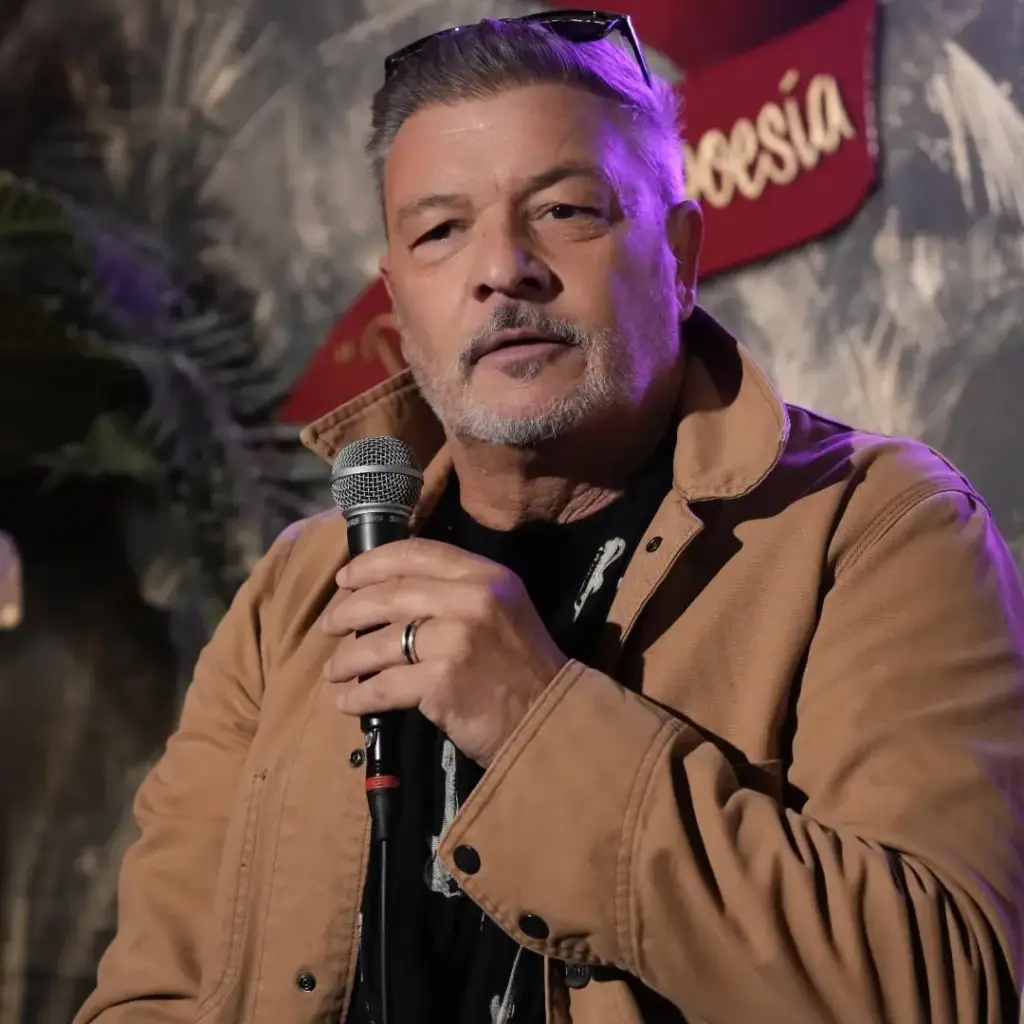
Workshops are part of the festival because a festival full of comedians is a good place to learn from them. In 2026 there were three:
- Blueprint with Iain Anderson, on Sunday at Tropicana, for comedians who want to build their material properly. Iain won Best Special at the first edition of the MICF Awards, and his 2026 show Traumedy had already toured the UK and Europe.
- A stand-up workshop with Dan Feist, on Saturday afternoon, for people who want to get on stage. Dan was president of the first edition and hosted the 2026 Closing Gala.
- A dark comedy workshop with Belinda Filippelli, on Saturday at Tropicana, the day after her debut solo show.
Some workshop places were free, as part of the festival’s free daytime programme, which also included comedian round tables and a talk on women in Spanish comedy. Workshops for 2027 will be announced with the programme in June 2027.
Where to learn stand-up in Madrid the rest of the year
Most stand-up courses in Madrid are in Spanish. Schools such as Escuela de las Artes de la Comedia and Estudio Teatro Madrid run stand-up courses at different levels, and Fundación SGAE has run an advanced stand-up workshop in Madrid with Esther Gimeno, aimed at writing monologues with a genuine point of view (Fundación SGAE).
If you perform in English, most of the learning happens at open mics and in the English comedy community. We wrote about the people who built it in Madrid’s English comedy scene.
How to choose a comedy workshop
- Check who’s teaching. Go and see the teacher perform first. If you don’t like their comedy, you probably won’t like their notes.
- Look for stage time. The best courses end with a real show in front of a real audience.
- Pick your language. Write and perform in the language you think in, at least at first.
- Keep the open mics going. A course without regular stage time teaches theory, not comedy.
FAQ
Are there comedy workshops in Madrid?
Yes. Several schools run stand-up courses in Spanish all year, and the Madrid International Comedy Festival runs workshops with visiting comedians every October.
Are there stand-up workshops in English in Madrid?
Fewer than in Spanish. For English-speaking comedians, the English open mic scene is the main training ground, and the festival brings visiting comedians to teach every October.
How long does it take to find your comedic voice?
There’s no fixed number. It depends on how often you perform and how honestly you write. Steve Martin described ten years of learning before he got it right, but many comedians find a clear voice sooner with regular stage time.
Can I perform at the Madrid International Comedy Festival?
Comedians apply and the festival selects, and some are invited. Start on the Do Comedy page. For why stand-up deserves to be taken seriously in the first place, read stand-up comedy as an art form.
The Madrid International Comedy Festival 2027 runs from 6 to 10 October 2027. Join the list to hear about workshops and tickets first.
If your goal is confidence rather than comedy, read what stand-up teaches about public speaking.