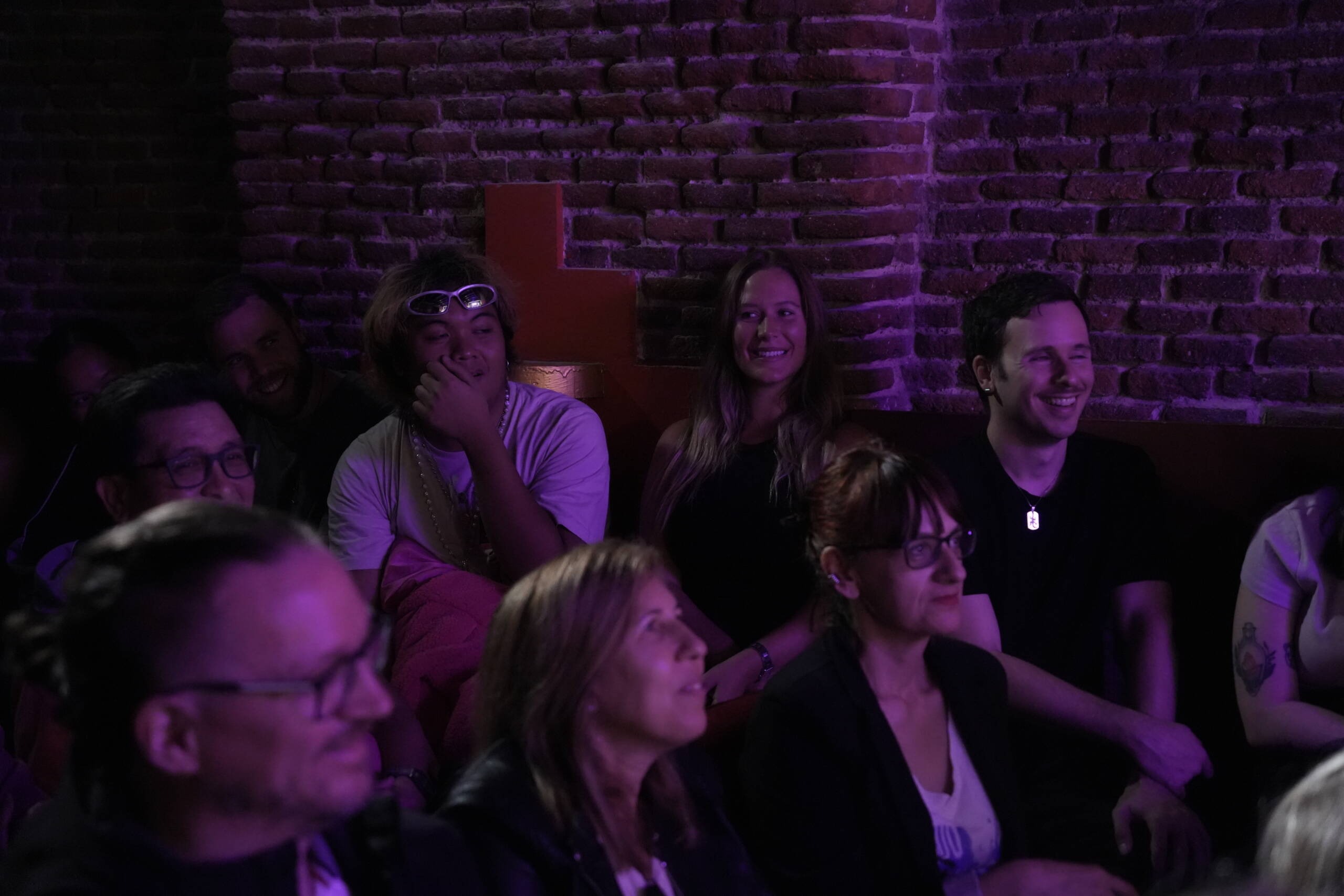


Madrid’s comedy scene has always been mostly Spanish, and it should stay that way. But some of the most interesting things happening in the city’s comedy right now come from comedians who were born somewhere else, either passing through on tour or living here and performing in their own language.
This article looks at what international comedians in Madrid bring to the local scene, with examples from the big tours and from the Madrid International Comedy Festival, where more than 70 comedians from over 20 countries performed in 2026.
The big tours that come through Madrid
The best-known international comedians do play Madrid, and they usually perform in their own language. Ricky Gervais brought SuperNature to IFEMA Palacio Municipal on 16 November 2019, all in English, with no subtitles (Tomaticket). Louis C.K. played Ridiculous at Teatro Capitol Gran Vía in February 2026 (Todos al Teatro). Eddie Izzard played Ancora Madrid on the Force Majeure tour in April 2014 (Wikipedia), then came back in late 2016 to perform the same show in Spanish, aiming for an almost fully Spanish version by the end of the Madrid run (Chortle).
Reviewing an earlier Louis C.K. show in Madrid, Letras Libres noted how unusual it was for an American comedian to tour southern Europe instead of the safer markets of the UK, the Netherlands and Scandinavia. Those dates matter because they show there’s an audience in Madrid for comedy in other languages, at theatre scale.
This isn’t new
Bringing international comedy to Madrid has a history. The company Yllana produced the Festival Internacional de Teatro de Humor de Madrid at Teatro Alfil from 1993, with the aim of bringing international humour shows to the capital (Yllana).
Latin American comedians have been part of the story for a long time too. The Colombian comedian Andrés López toured Spain in 2007 and 2008, playing Teatro Gran Vía and the Palacio de Congresos (Wikipedia). Latin Americans make up 48.9% of the foreign residents of the Comunidad de Madrid (Comunidad de Madrid), so there’s a large audience that shares the language but not always the references of Spanish comedy.
The international comedians who live here
Tours come and go. What changes a local scene is the comedians who stay. In the city of Madrid, 30.5% of registered residents were born outside Spain on 1 January 2026 (Ayuntamiento de Madrid), and some of them are comedians.
At the 2026 festival we saw what that looks like on stage:
- Joseph Ewonde Jr., born in Nigeria and raised in Spain, won Best Special for Pata Negra, a Spanish-language hour about his life here, the comments and the looks.
- Hassan Elfadul, who grew up in Sudan, won Best Act and led a night of comedy in Arabic at Tropicana about life away from home.
- Dhaval and Prateek did Tuchch Vichar in Hindi at Teatro Las Aguas.
- Abner Muzel and Gabriel Zubek did Show Brasil com S in Portuguese at Tropicana.
- Dario Pelagò and Mary G did ER Fatto Mio, an hour in Italian, at Picnic.
Several of those shows bring in audiences who rarely get live comedy in their own language in Madrid. You can see the full list on the 2026 shows page.
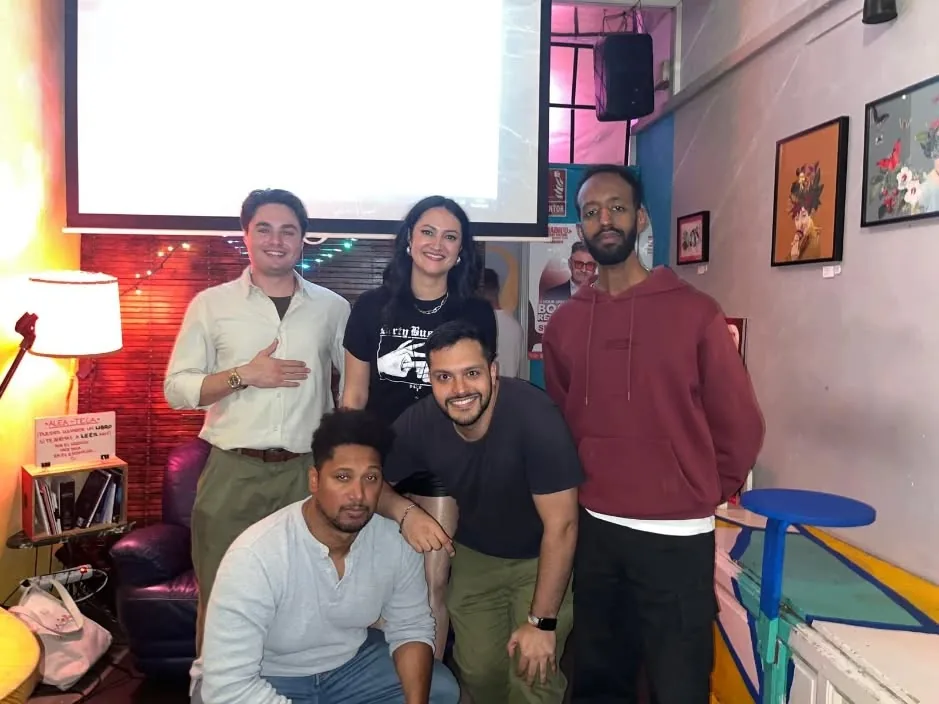
What international comedians bring to the local scene
Here’s what we’ve seen in two editions of programming comedians from more than 20 countries:
- New audiences. A Hindi or Portuguese show brings people into a comedy venue who might never have walked into one.
- Different traditions. British and American club comedy, Latin American storytelling and the Spanish monologue each build a joke differently. Putting them on the same programme lets audiences and comedians compare.
- Stories the city hasn’t heard on stage. Pata Negra worked because it told a Spanish story from a point of view Spanish comedy doesn’t always hear.
- Connections. A festival puts comedians from different countries in the same rooms for several days, so local comedians get seen by people from abroad.
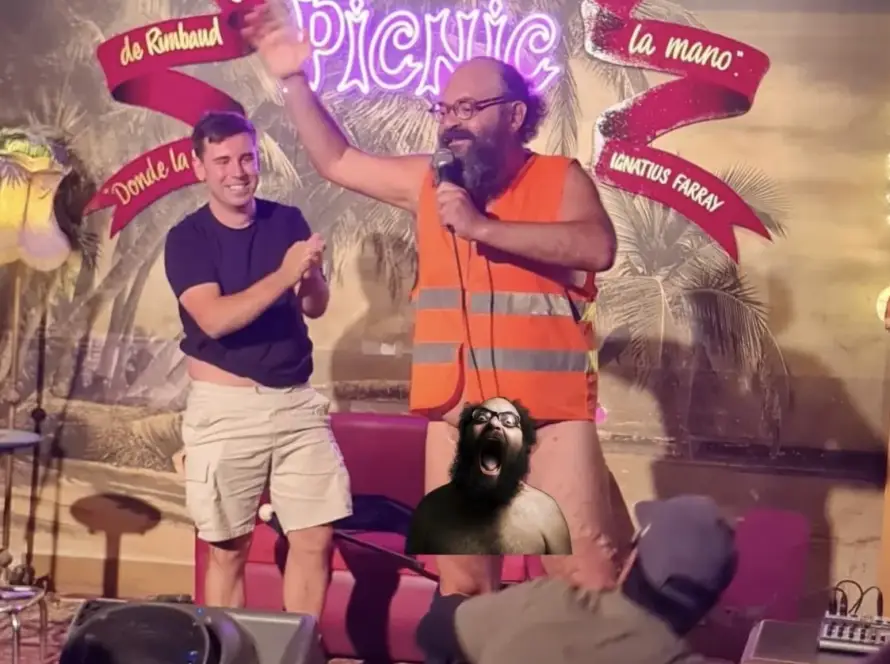
It goes both ways. Spanish comedians are at the heart of the festival too. In 2026, Ignatius Farray and Danny Boy shared a split hour at Picnic, and Spanish-language shows ran next to international ones, often in the same venue on the same night. Read more in the 2026 line-up highlights.
Why the festival is built this way
Every show at the Madrid International Comedy Festival is performed in the language it was written in. Nothing is translated, because translated jokes rarely survive. In 2026 that meant eight languages: Spanish, English, French, Dutch, Portuguese, Hindi, Italian and Arabic. For 2027, nine are planned. The thinking behind it is in our page on a multilingual comedy festival in Spain.
Comedians apply and the festival chooses, and some are invited. If you’re a comedian based in Madrid or abroad and want to be part of the next edition, start on the Do Comedy page. To see how this compares with the rest of the continent, read where Madrid fits in the European comedy festival circuit.
FAQ
Do international comedians perform in Madrid?
Yes. Big names like Ricky Gervais and Louis C.K. have played Madrid theatres, and many comedians born abroad live in the city and perform every week, in Spanish, English and other languages.
Can I see comedy in languages other than Spanish in Madrid?
Yes, especially in English. During the Madrid International Comedy Festival you can also see shows in French, Italian, Portuguese, Arabic, Hindi and Dutch.
How many countries are represented at the Madrid International Comedy Festival?
The 2026 edition had comedians of more than 20 nationalities, performing in eight languages across nine venues.
When is the next festival?
The Madrid International Comedy Festival 2027 runs from 6 to 10 October 2027. The programme and tickets will be announced in June 2027. Join the list to hear first.
Comedians reading this: here is our guide to applying to comedy festivals.